The EUR/USD pair remains the most traded currency pair in the forex market, combining the economic weight of the Eurozone with the global influence of the US dollar. Its movements are closely watched by traders, investors, and policymakers alike. Understanding both fundamental drivers and key technical levels is essential for making informed trading decisions and navigating the pair’s volatility.
Fundamental Drivers of EUR/USD
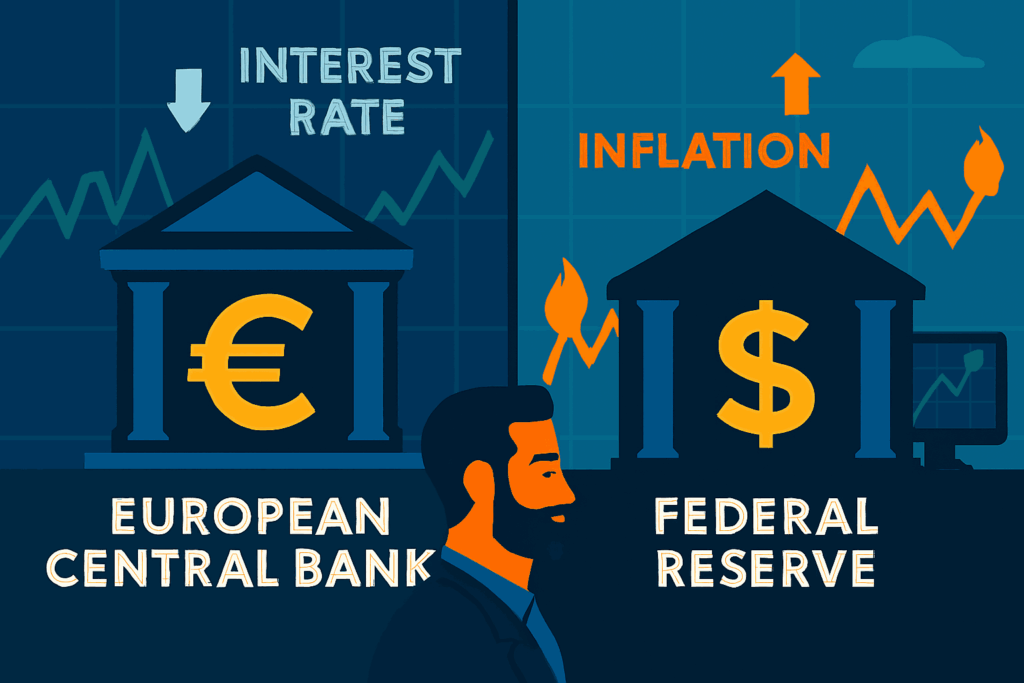
Several macroeconomic and geopolitical factors influence EUR/USD fluctuations:
- Interest Rate Differentials: One of the most significant drivers is the difference between European Central Bank (ECB) and Federal Reserve (Fed) interest rates. Higher US rates relative to Eurozone rates generally strengthen the USD against the EUR, while dovish Fed policies can lift the Euro.
- Economic Indicators: GDP growth, employment data, retail sales, and manufacturing indices from both the Eurozone and the US significantly impact the pair. Strong US economic data often leads to USD strength, whereas positive Eurozone metrics can support the EUR.
- Inflation Trends: Inflation rates and expectations drive central bank policy decisions. Rising Eurozone inflation may prompt ECB tightening, boosting EUR, while US inflation spikes often lead to Fed rate hikes, supporting USD.
- Geopolitical Events: Trade agreements, sanctions, political stability, and elections in both regions can introduce volatility. For example, EU political uncertainty may weaken the Euro, while US fiscal policy developments can sway the USD.
By monitoring these fundamental factors, traders can anticipate potential shifts in EUR/USD and align trades with macroeconomic trends.
Key Technical Levels and Patterns
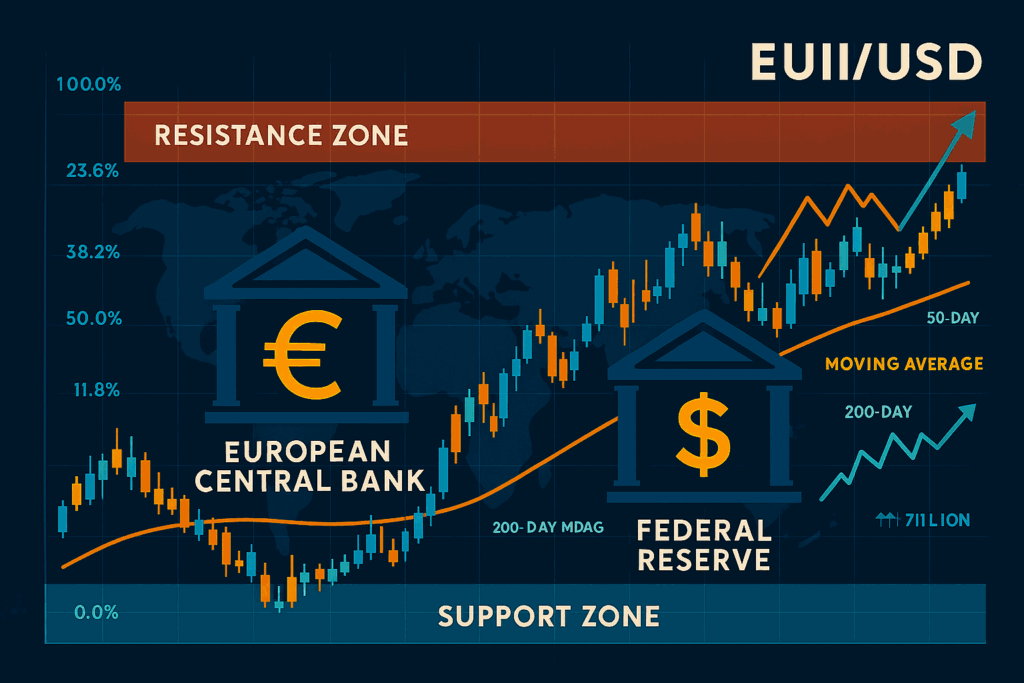
Technical analysis complements fundamental insights, helping traders identify entry and exit points:
- Support and Resistance Levels: Identifying historical price levels where the pair has repeatedly bounced or faced rejection helps predict future price reactions. Traders often set stop-loss and take-profit orders around these zones.
- Moving Averages: Simple and exponential moving averages highlight trend direction. For instance, a 50-day MA crossing above the 200-day MA can indicate a bullish trend for EUR/USD.
- Fibonacci Retracements: Traders use Fibonacci levels to gauge potential retracement points during corrections, providing opportunities to enter with lower risk.
- Candlestick Patterns: Patterns such as pin bars, engulfing candles, and doji formations provide clues about market sentiment and potential reversals.
By combining these technical tools with fundamental awareness, traders can enhance their decision-making process and improve trade timing.
Practical Trading Considerations
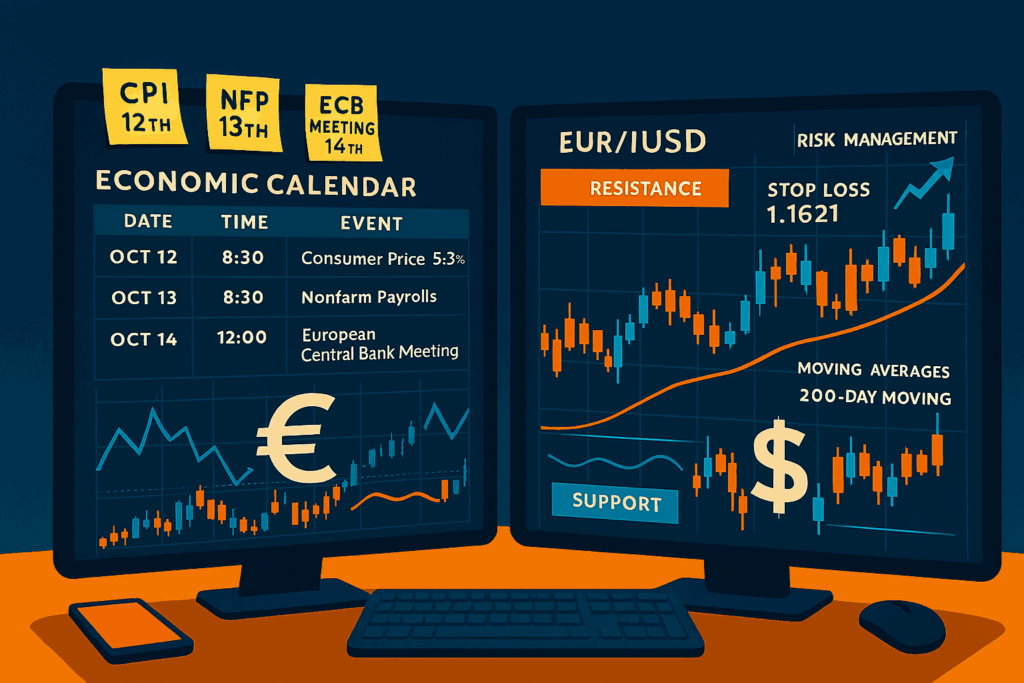
For active traders, integrating fundamental and technical insights is critical:
- Risk Management: Given the EUR/USD’s liquidity, volatility can be rapid. Setting proper stop-loss levels and sizing positions according to account risk is essential.
- Event Awareness: Key announcements like ECB meetings, US Nonfarm Payrolls, or CPI reports can create significant short-term moves. Monitoring an economic calendar ensures traders are prepared for volatility spikes.
- Correlation Analysis: EUR/USD often exhibits correlations with other major pairs, commodities, or stock indices. Recognizing these relationships helps in hedging or amplifying trading opportunities.
A practical example: if US economic data is weaker than expected while Eurozone growth surprises positively, traders may anticipate EUR/USD appreciation. Technical confirmation, such as breaking above a resistance level, can provide the signal to enter a long position.
Benefits for Traders
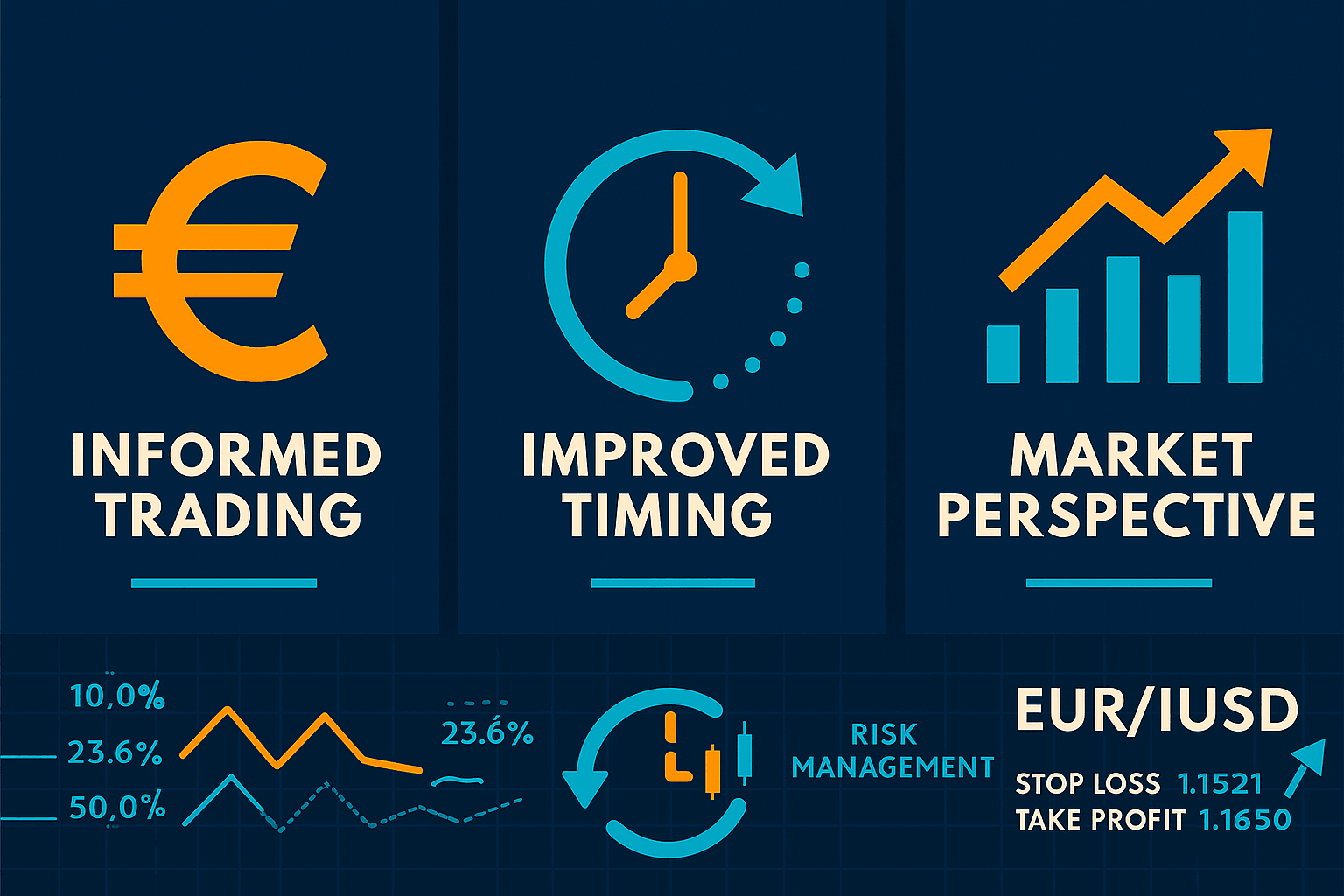
- Informed Trading: Understanding both fundamentals and technical levels reduces reliance on guesswork.
- Improved Timing: Identifying high-probability entry and exit points can enhance profitability.
- Market Perspective: Awareness of macro drivers and technical structure gives traders a comprehensive view of potential price movements.
Final Thoughts

EUR/USD trading requires a balanced approach, combining macroeconomic fundamentals with technical analysis. By keeping a close eye on interest rates, economic data, inflation trends, and geopolitical developments, while monitoring key support, resistance, and trend levels, traders can make more strategic decisions. Mastering both aspects allows traders to anticipate price movements, manage risk effectively, and capitalize on the opportunities presented by this globally significant currency pair.