USD/CAD, commonly referred to as the “Loonie,” is one of the most actively traded currency pairs in the forex market. Its movements are influenced by a mix of global commodities, particularly oil, and domestic economic indicators such as trade balances, GDP, and employment data. Understanding the drivers behind USD/CAD fluctuations is crucial for traders aiming to capture profitable opportunities.
The Influence of Oil Prices
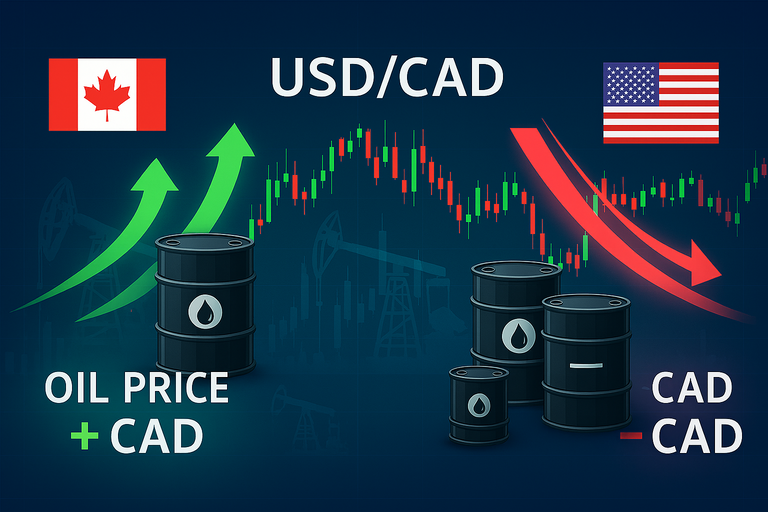
Canada is a major global oil exporter, making the Canadian dollar highly sensitive to crude oil price movements.
- Rising Oil Prices: When oil prices increase, the CAD typically strengthens against the USD. Higher oil revenues improve Canada’s trade balance and overall economic outlook, attracting foreign investment and increasing demand for the Loonie.
- Falling Oil Prices: Conversely, declining oil prices can weaken CAD. Lower energy revenues may reduce investor confidence and capital inflows, resulting in USD/CAD moving higher as the dollar gains relative strength.
Traders often watch crude oil benchmarks such as West Texas Intermediate (WTI) and Brent crude for insights into potential CAD strength or weakness.
Trade Data and Economic Indicators
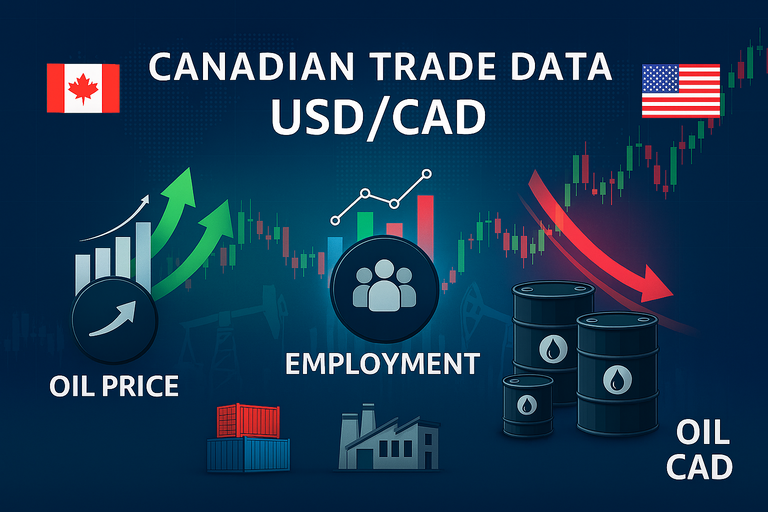
Trade data plays a significant role in USD/CAD dynamics, given Canada’s reliance on exports to the US and other partners:
- Trade Balance: A trade surplus generally supports the CAD, while a deficit can weigh on the currency. Significant shifts in exports or imports, especially in key sectors like energy and manufacturing, can trigger USD/CAD volatility.
- GDP and Employment Data: Strong economic growth and rising employment numbers in Canada signal a robust economy, boosting CAD. Weak data, on the other hand, tends to benefit USD as investors seek stability.
- Inflation Figures: The Bank of Canada (BoC) closely monitors inflation. Higher inflation can prompt tighter monetary policy, supporting the CAD, while subdued inflation may indicate looser policy, pressuring the currency.
Monitoring these economic indicators helps traders anticipate market reactions and adjust positions accordingly.
Trade Strategies and Technical Considerations
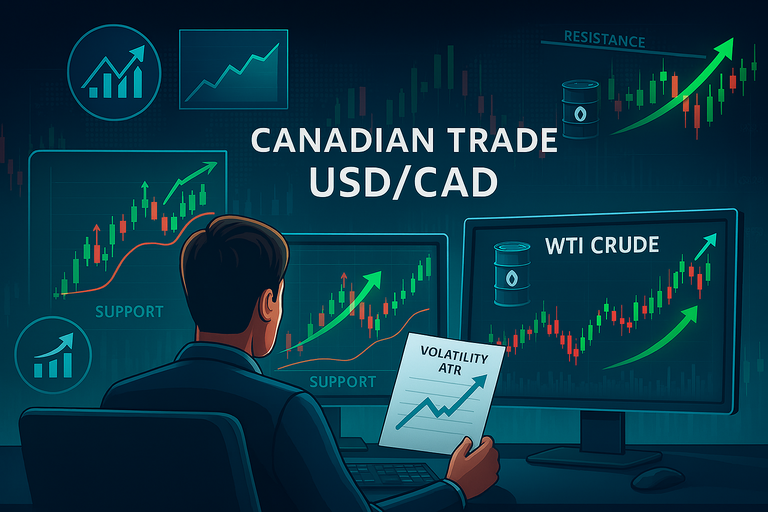
Successful USD/CAD trading combines fundamental insights with technical analysis:
- Support and Resistance Levels: Historical highs and lows act as critical reference points for entry and exit strategies. Traders can identify reversal zones or breakout opportunities using these levels.
- Trend Analysis: Moving averages, trendlines, and momentum indicators can help identify the current market trend. Recognizing whether USD/CAD is in an uptrend, downtrend, or range-bound market is essential for trade planning.
- Correlation with Oil: Traders should analyze the correlation between USD/CAD and oil prices. A sudden oil shock can lead to rapid adjustments in the pair, providing high-probability trading setups.
- Volatility Metrics: Tracking the average true range (ATR) and other volatility measures allows traders to size positions appropriately and manage risk, particularly during key economic releases.
For instance, if WTI crude prices surge while Canadian trade data exceeds expectations, traders may take a long CAD position, targeting technical resistance zones while placing stop-loss orders below support levels to protect against sudden reversals.
Key Considerations for Traders
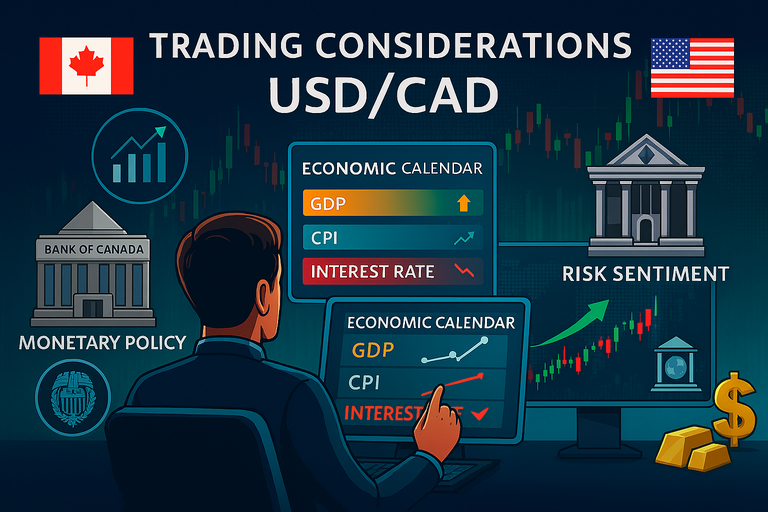
- Economic Calendar: Keeping track of Canadian and US economic releases such as GDP, trade balance, CPI, and employment reports is vital. Market-moving events can lead to sudden spikes in USD/CAD volatility.
- Central Bank Policy: BoC and Federal Reserve policy decisions, including interest rate adjustments and quantitative easing announcements, can dramatically influence USD/CAD trends.
Global Risk Sentiment: CAD can also react to broader risk sentiment. In risk-off environments, the USD may strengthen relative to CAD as investors seek safe-haven assets.
Final Thoughts
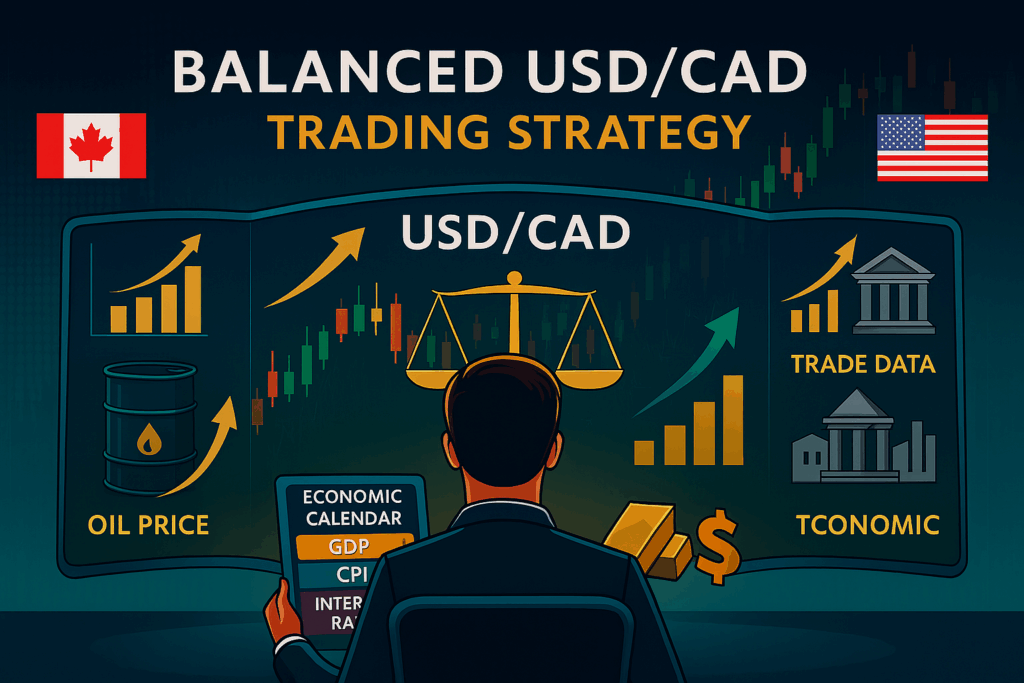
USD/CAD trading requires an integrated approach combining commodities, trade data, and macroeconomic indicators. By closely monitoring oil prices, Canadian economic releases, and central bank actions, traders can anticipate market movements and develop informed strategies. Technical analysis and risk management are essential complements to fundamental insights, helping traders capitalize on trends while protecting capital.
With a disciplined and well-informed approach, USD/CAD offers numerous trading opportunities for both short-term and long-term strategies.