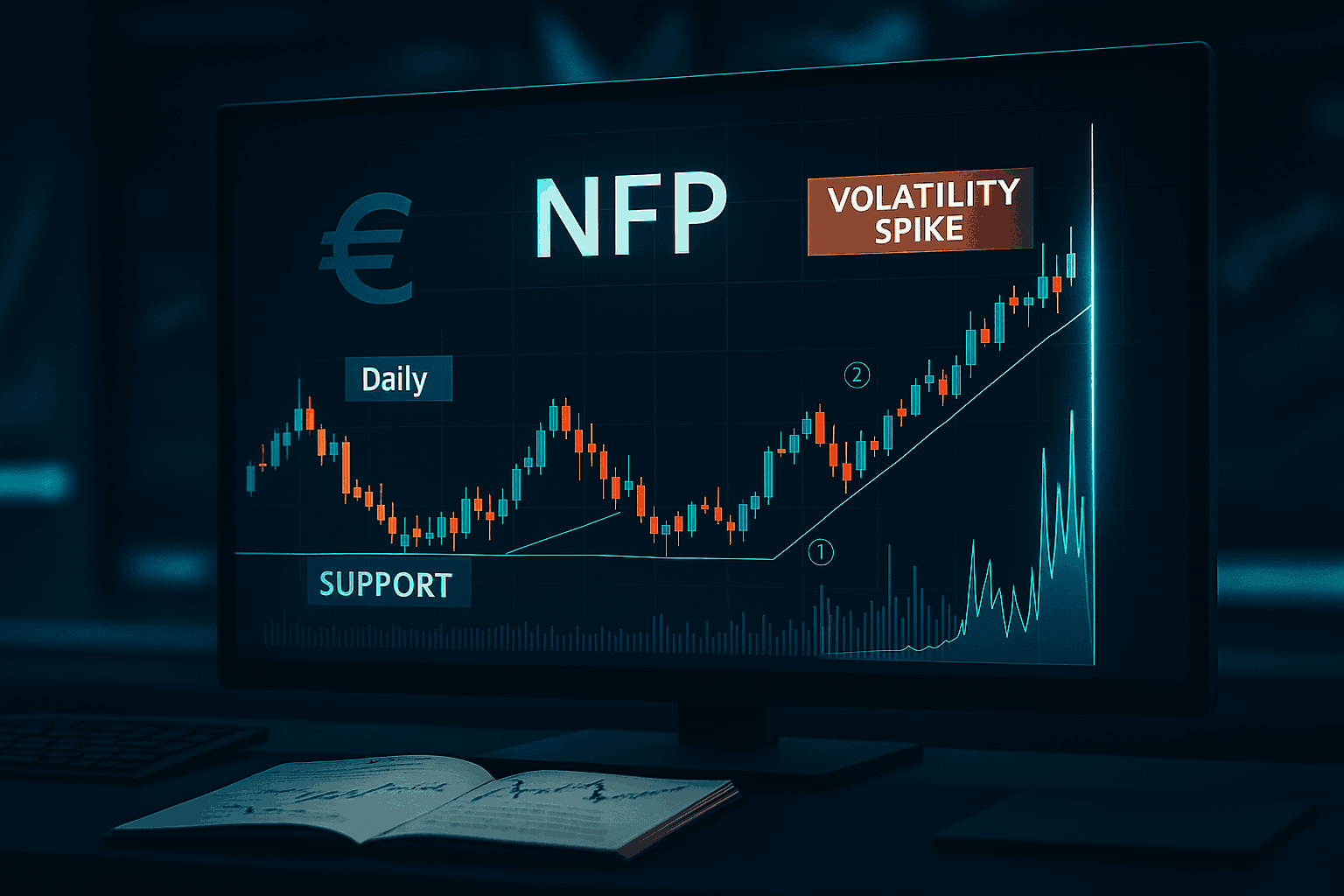
Trading NFP is centered around understanding the Nonfarm Payrolls (NFP) report, one of the most closely watched economic indicators in forex trading. Released monthly by the US Bureau of Labor Statistics, it provides insight into employment growth in the US economy, excluding agricultural jobs. NFP figures often trigger sharp movements in major currency pairs, particularly USD-based pairs like EUR/USD, GBP/USD, and USD/JPY. For traders, understanding how to approach this high-impact release is critical for managing risk and executing precise trades.
Why NFP Matters

NFP data reflects the health of the US labor market, which is a key driver of overall economic growth. Strong employment growth often signals a robust economy, potentially leading the Federal Reserve to tighten monetary policy. Conversely, weak NFP figures may suggest economic slowdown, influencing expectations for interest rate adjustments.
The market reacts immediately to surprises:
- Positive Surprise: Higher-than-expected job creation tends to strengthen the USD as traders anticipate tighter monetary policy.
- Negative Surprise: Lower-than-expected figures can weaken the USD, as market participants foresee possible economic stimulus or slower rate hikes.
Due to this high sensitivity, NFP releases often produce spikes in volatility, making pre-defined risk management crucial.
Practical Risk Management Rules

- Pre-define Position Size: Given the potential for extreme volatility, determine trade size in advance to avoid excessive exposure. Many traders risk only 1–2% of their account per NFP trade.
- Set Stop-Loss and Take-Profit Levels: Use technical analysis to identify key support and resistance zones. Placing stops and targets around these levels helps protect capital against sudden price swings.
- Avoid Overtrading: High-impact news can tempt traders to enter multiple positions. Focus on a single, well-planned trade aligned with your strategy.
- Use Volatility Indicators: Tools like Average True Range (ATR) can help gauge expected price movement and inform realistic stop-loss placement.
Entry Plans for NFP
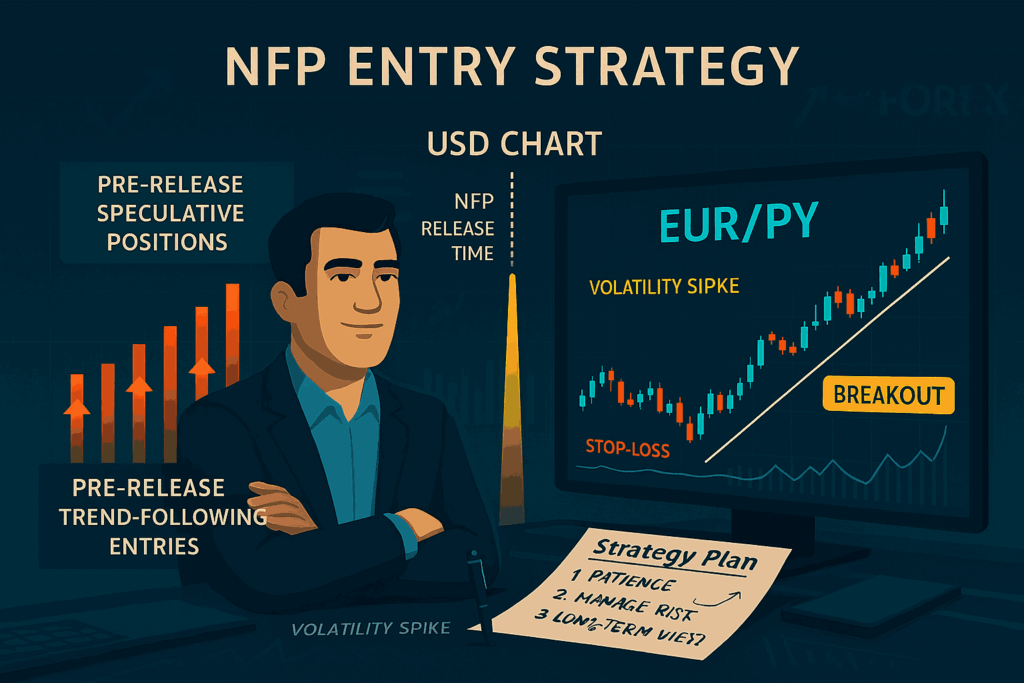
Traders generally adopt one of two approaches when trading NFP:
1. Pre-Release Strategy:
Some traders enter positions before the release, speculating on the expected outcome. This approach is high-risk, as market reaction can be unpredictable. Risk rules become essential, with tight stop-loss orders protecting against sudden reversals.
2. Post-Release Strategy:
Many traders prefer to wait for the initial volatility to settle. Once a clear directional bias emerges, traders can enter trades with defined risk parameters. This method reduces the chance of being caught in erratic price spikes while still capturing significant moves.
Regardless of the approach, monitoring correlated USD pairs and market sentiment is crucial. Cross-checking NFP reactions with bond yields and futures markets can help validate the USD direction.
Combining Technical and Fundamental Insights
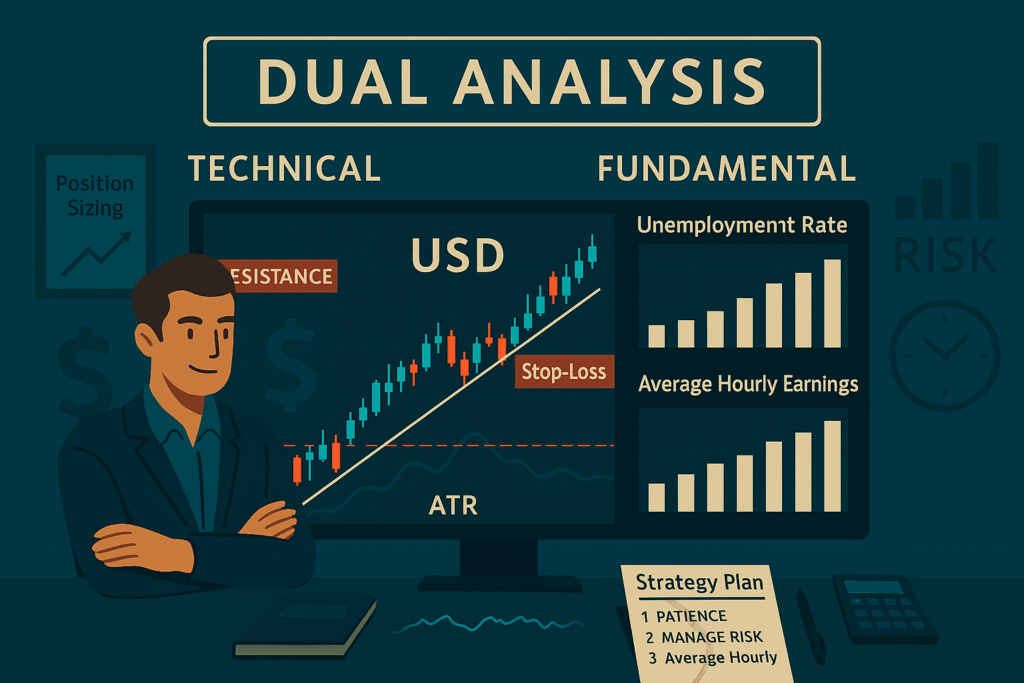
Even during NFP, technical levels matter:
- Support and Resistance: Identify daily and weekly key levels before the release.
- Trend Indicators: Moving averages or momentum oscillators can provide guidance for entering in line with prevailing trends.
- Volatility Channels: Bollinger Bands or ATR channels help assess potential price ranges and optimal entry points.
By combining technical signals with fundamental expectations, traders can improve decision-making under high-impact conditions.
Key Considerations
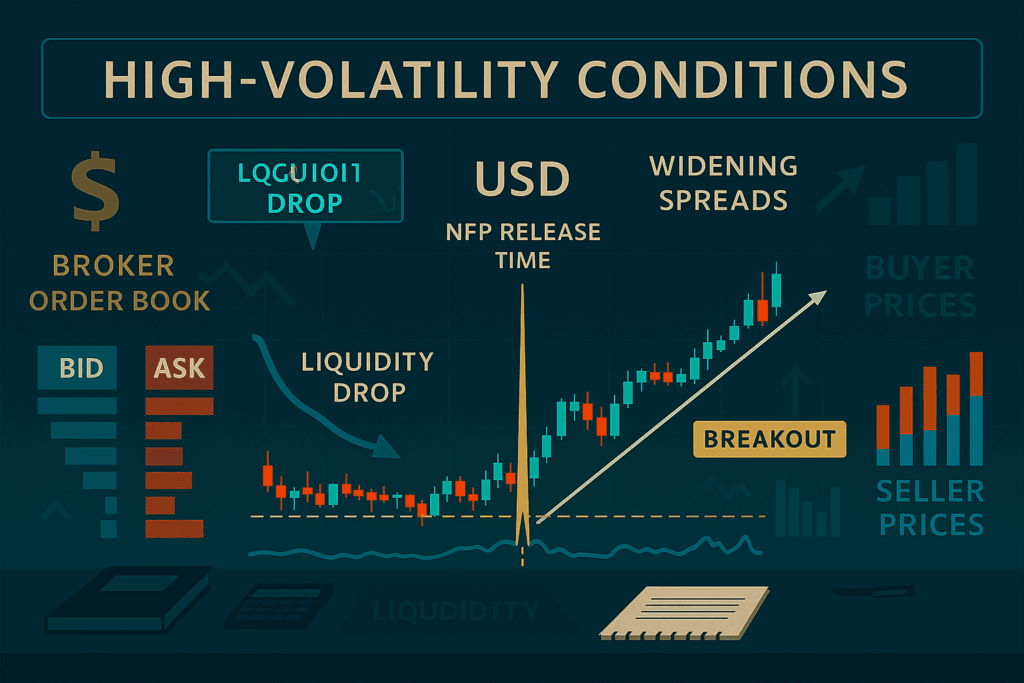
- Liquidity: The first 15–30 minutes after the release often see the highest volatility. Avoid overcommitting during this phase.
- Spread Widening: Forex brokers may widen spreads around NFP releases. Factor in this cost before placing trades.
- Economic Calendar: Always cross-reference NFP with other US economic indicators such as ADP employment data, unemployment rate, and average hourly earnings.
Final Thoughts
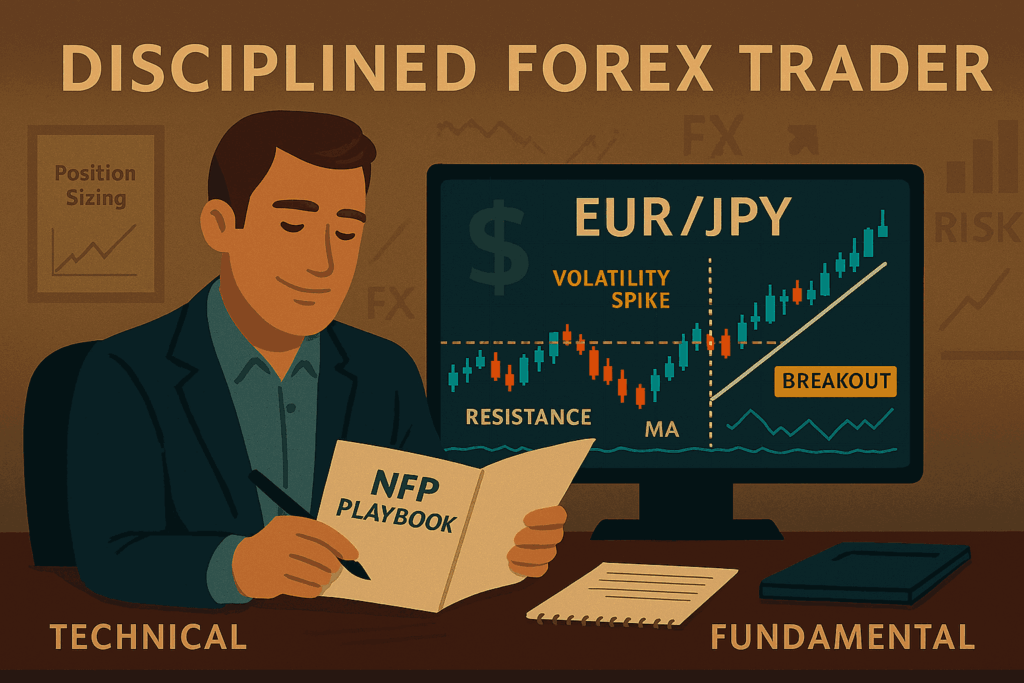
Trading NFP requires discipline, preparation, and a clear understanding of risk. By setting proper position sizes, using stop-loss and take-profit levels, and choosing a structured entry plan, traders can navigate the volatility effectively. Combining technical and fundamental insights ensures informed decisions, while attention to liquidity and spread considerations safeguards against unexpected losses.
For forex traders, mastering NFP trading can provide both short-term opportunities and a deeper understanding of market dynamics surrounding the US labor market.